
Benefits of Green Energy for Businesses
Find a greener plan

Choosing to produce or use green energy can benefit your business in a variety of ways. Consumers are looking to do their part by choosing to support businesses that are making visible efforts to be more eco-friendly, in addition to going green themselves. According to a BDC Study on consumer trends, over half of all global consumers factor in the eco-friendliness and sustainability of companies when making purchases. In fact, the Business Development Bank of Canada found that roughly 40% of people in the United States and Canada are more than willing to pay slightly more for environmentally friendly products and services.
Many business owners worry about the financial challenges associated with switching to clean energy, but the costs may not be as prohibitive as they appear. Energy suppliers are even providing incentives for consumers and businesses to switch over to green energy.
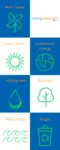
The most common types of green energy for businesses are:
- Wind power
- Solar power
- Geothermal energy
- Biomass
- Hydropower
- Tidal energy
- Biogas (Renewable Natural Gas)
If you’re not sure where to start when it comes to integrating alternative power sources into a large commercial enterprise or if you’re just unsure what green power options are available for your small business, this guide is a great place to start.
How Your Company Can Become More Sustainable
We wrote above about some of the different green energy plans and add-ons you can get from your providers. However, larger consumers have more opportunities to make a bigger impact and may have the means to take on bigger projects as an investment. Below are some green energy solutions for companies or large consumers.
1. Renewable Energy Credits (RECs) and Carbon Offsets
RECs allow you to directly support facilities producing green energy, while Carbon offsets are credits that allow you to fund carbon-reducing projects to counteract your emissions.
There are many different options for RECs and Offsets, which we go into in great detail. So, if you’d like a greater understanding of the types of credits to choose from and how to make your purchase, read our complete guide to Renewable Energy Credits and Carbon Offsets.
2. Micro-generation
Micro-generation— or on-site generation— is the production of renewable electricity on a micro-scale like a small biogas power plant powering a residential community in a rural or semi-urban location or the installation of solar panels on private property, for example. The requirements to become a micro-generator vary by province. In Alberta, for instance, the maximum amount of electricity to be consumed or produced and still be considered a microgenerator is 5MW; and the generation must take place on the site owned or leased by the generator, with the intent to produce a part or all of their total electricity consumption.
3. Energy Efficiency
You and your business can benefit directly via financial incentives or programs offered by your province to help absorb the costs associated with purchasing renewable energy products or making efficiency upgrades. You can find the financial incentives or programs available for your province on the Government of Canada website here. While energy efficiency upgrades have some costs associated with them initially, the amount you save in energy and the associated costs will cover those expenses.