
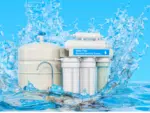
Information about reverse osmosis (RO) water treatment systems is often geared towards residential use more than industrial or commercial use. However, these systems can have a big impact on commercial water quality and costs.
This article will explain what reverse osmosis is, how it works, and how it can benefit business and commercial ventures. Our guide below will help explain everything you need to know.
What is reverse osmosis, and how does it work?
Reverse osmosis (or known as an RO system) is a type of water purification technology that uses a semi-permeable membrane and other additional filters to remove larger particles and anything bigger than water molecules, including unwanted ions from the water. Reverse osmosis works by applying pressure on one side of the membrane, forcing water through the membrane, and leaving the contaminants behind. That purified water then passes through the membrane while all of the previously mentioned contaminants are removed completely, being flushed out and away.
An easy way to visualize how reverse osmosis filter systems work is essentially like making a drip-style coffee. The coffee filter holds the coffee grounds, and as the water works its way through, the liquid pours down with the grounds remaining above the filter. RO works similarly, as the membrane filter traps contaminants so that the clean water can continue through to where it needs to be.
Differences between reverse osmosis and water filtration
Water filtration is the process of filtering water, regardless of what kind of system is doing it. Reverse osmosis is a type of water filtration. There are many types of water filtration systems, such as RO, as mentioned, ultra-violet filtration, activated carbon, water softeners (Ion exchange), and sediment filtration.
Reverse osmosis itself forces water through a semipermeable membrane that removes things such as dissolved solids, arsenic, and more.
What does reverse osmosis remove?
Reverse osmosis removes a myriad of things from your water that can make the taste unpleasant and impact cooking and cleaning, and more. Reverse osmosis filters are highly effective and great at removing things like:
- Giardia, cryptosporidium and other protozoa
- Bacteria such as e. coli, salmonella, shigella, and more
- Microplastics
- Common chemicals such as metal ions, sodium, chloride, copper, chromium, and others
- Lead, mercury, and other hazardous heavy metals are filtered out, and though modern municipal systems already filter these out from the water, they may still be present in older systems or if you’re using non-municipal sources such as well water
- Other chemicals that may be present in your water include arsenic, fluoride, radium, sulfate, calcium, potassium, nitrate, and phosphorous as examples.
Companies With Reverse Osmosis Systems
Enercare
Features
Enercare has a particular page on their website focusing on reverse osmosis system. According to the company, the solution can help remove contaminants provide pure, and healthy water through a purification technology that uses a semi-permeable membrane and other filters to remove anything larger than water molecules, including unwanted ions and larger particles from water.
The technology works by applying pressure to water on one side of the membrane, forcing it through the membrane while leaving contaminants behind. The purified water passes through the membrane while the concentrated contaminants are flushed away. Enercare also explains that in addition to the membrane, pre-filters and carbon filters are often used to remove debris, dust, and other larger sediment to make the reverse osmosis system more effective.
Effective, their reverse osmosis systems are effective at reducing: microplastics, protozoa; bacteria; viruses, common chemicals, heavy metals like and other chemicals such as arsenic, fluoride, radium, and more.

Reaches AB, ON, BC
View DetailsCulligan
Features
Water softener, water filtration, ice and water dispenser, and many other solutions are offered by Culligan. One of them is the reverse osmosis systems; a technology that ensures the drinking water is free from a wide range of contaminants through a semipermeable membrane that filters out impurities as small as a single atom, including lead, mercury, and chromium.
According to the company, the Aquasential Reverse Osmosis Drinking Water Filtration System offers customized filtration and advanced features to enhance water quality. Most RO systems also include additional stages of filtration such as sediment filters, carbon filters and other advanced options for additional filtration capability.
Regarding the durability, the products are designed to be long-lasting, with industry-leading warranties. The company highlights the importance of following the recommended maintenance to take the best possible.
For companies that are looking for under sink solution, according to Culligan the installation is simple, and that are space-saving designs with smart features available. Another additional information about RO is that their systems are certified to reduce 18 times more contaminants than the leading standard filter pitcher.

Canada-Wide
View DetailsFilters that work in reverse osmosis systems, and how many do you need?
RO systems have two different styles, tanked and tankless. The number of filters depends on which system your business or commercial use, and within residential systems, of course.
A tanked 4-stage reverse osmosis system consists of the reverse osmosis membrane and three other filters alongside it.
- Pre-filter or sediment filter: This provides a first layer for the large debris, such as dust and dirt and others of that size.
- Carbon filter #1: This filter is for removing volatile chemicals, chloramines, and chlorine to reduce bad tastes and odours.
- The RO membrane: This is the main filter in the reverse osmosis system that significantly reduces the contaminants in the water. The RO membrane reduces total dissolved solids (TDS), more chemicals, and heavy metals.
- Carbon filter #2: This final filter adds an extra layer that further reduces any bad odours, taste, chlorine, and more that may have been missed at the start.
Tankless RO systems use an electric pump to provide instant RO-treated water without the need to store the water in a tank. The tankless RO system that many companies provide has two stages and a pump.
- Pre-filter or sediment filter, exactly like the tanked version. It’s the first defence and cleaning layer that helps get rid of debris, dust, dirt, and other larger contaminants that get in the way.
- The RO membrane, same as the tanked version. It’s the main filter that significantly reduces the TDS, chemicals, heavy metals, and more.
And that’s it. The tanked version works more like a coffee drip machine that goes through the varying filters to give you your end result of RO filtered water, while the tankless version enables this process to be done faster, since the electric pump provides instant RO-treated water without the need to store it in a tank.
As for the argument that more filters may be better, for any water treatment system, not just reverse osmosis ones, more isn’t always better. More filters can, in theory, mean even cleaner water, but in most cases, too many filters will just hinder the system. The pros and cons of having extra stages of filters can be:
- Enhanced filtration since more filters essentially means that they can catch anything that the previous filters missed, leading to purer water and even better for improving taste and odour, especially carbon filters, as they are the best for removing the contaminants that affect odours and tastes, such as chlorine and others.
- Longer filter life is also a benefit, as having more filters puts less burden on any one filter in the system, and the RO membrane will also have fewer contaminants to filter out, ensuring that it will have a longer filter life, and it can go longer without needing to be changed.
The cons and drawbacks of having more filters are:
- Higher costs, since more filters mean more money and more money spent on replacing them when the time comes to do so, especially for the first ones in the chain that go through the most work filtering out debris.
- Reduced water flow is a detriment, especially depending on what your commercial or business system may need. Having a high flow rate may be entirely necessary, as having more time between full takes will increase the number of stages a unit has, meaning it will take longer to fill a tank or use the filtered water.
- The incremental returns also mean that, for the most part, more stages are not necessary. Most of the work gets done in the initial filters, as they do the heavy lifting. For homes or businesses that need extra filtration, having more filtration can be helpful in filtering a higher number of contaminants.
How often do filters need to be replaced?
Filters for both tankless and tanked options need to be replaced approximately every 1 to 3 or more years, depending on what it does and how hard the system has to work.
Pre-filters need to be replaced as soon as possible, with their lifespan being around one year or so before they need to be changed, as they take on the most work. Carbon filters can also need to be changed within one year, especially if it is the first in line after the pre-filter. The RO membrane filter itself needs to be changed around the three or four-year mark, depending on how much it’s working with the other filters in the system.
Ultimately, the filters need to be changed every year for the pre-filters and every three years for the RO membrane itself.
How long does a reverse osmosis system last?
A reverse osmosis system will usually last around 10-16 years if properly maintained and upkept by changing the filters and ensuring the system is working correctly according to your manufacturer’s guidelines. Even more important when you’re running a larger system for a commercial and/or industrial business. If your system deals with hard water, you can pair your reverse osmosis system with a water softener that can be installed on the main line, which will help to extend the filter and RO membrane life, as hard water on its own can be harsh on filters. While RO systems remove some minerals that are found in hard water, the process of filtering these minerals can still wear down the membrane and reduce lifespans.
Hard water can also affect performance while making appliances and other systems work less effectively.
How much do reverse osmosis systems cost?
Tanked and tankless systems cost upwards of $2,000, depending on what it’s set for, such as residential vs commercial and for how big or how many you may need to purchase. Rentals can be done as well, depending on what manufacturer you go with, and buying them outright, of course. Renting can be done for as little as $35 per month, and upwards into the hundreds.
For commercial and industrial business settings, an RO system can cost as low as $1,000 if it’s for a smaller venture, or upwards to $15,000 for a larger business/commercial property, depending on what the water needs are.
Common issues with reverse osmosis systems
- Clogged filters, low water pressure, leaks, and other issues, such as taste and odour problems, all stem from the filters being at the end of their lifespans. Sediment and carbon filters can get clogged easily as they work to remove the impurities and larger debris, such as dust and dirt, and metals. Clogged filters can also pose a health risk, as the clogged-up debris can and will accumulate bacteria that will flow into your water system.
- Low water pressure can also be a problem, not just for RO systems, but for others as well. Multiple filters can make water flow low and slow, and if the incoming water pressure is too low to begin with, it may flow even slower or not at all. If you have a tankless RO system, low water pressure can also be the result of the system pump malfunctioning and not passing the water through at the necessary pressure to do its job.
- As with any water system, or water treatment systems in general, there is always a chance of leaks, as there are many parts and connections. Having leaks develop over time is common and can be easily fixed, but it is good to ensure that the initial installation is done well, as it’s typically the result of tubes not being tightened enough or secured properly when changing filters or installing it for the first time.
Benefits of an RO system for commercial sectors/industries
The benefits of an RO system within the commercial sectors are important across Canada, especially since the majority of our water is hard water. Some areas of course have softer water, but most of the country has a lot of minerals and other things in the water. Combining an RO system with a water softener can not only make products better, but it can also reduce costs and problems that companies may have when dealing with solely hard water from the source, wherever that may be.
Food and beverage
Food and beverage, along with breweries, heavily benefit from having the purest and most filtered water they can. Taste and odours make a significant difference in how food and beverages are sold, and one messed-up batch can affect more than just sales.
Installing a reverse osmosis system (along with a water softener if in a hard water area) can greatly improve the quality of food and beverages made, with any odours or tastes coming from the water not affecting the finished results and giving way to better products immediately and for the foreseeable future.
Brewery
The brewery industry can benefit from RO systems just as much as the previously mentioned food and beverage industries. Having the purest water you can get makes it easier to see what you need to manufacture without worrying about any inconsistencies, whether that’s too many minerals with hard water or any odours and tastes that may come through if using municipal water, such as in the spring when there is more chlorine added, so the water can smell and taste like a pool.
Having filters such as an RO one that ensures better taste with no odour is imperative for creating the best products possible.
Manufacturing
Having pure water while working in manufacturing can help with how well systems work together and work altogether in the first place. Mineral buildup, such as calcium and limescale, can lead to downtime and awful maintenance times, along with spending money on possibly new systems altogether if it isn’t under control.
Having an RO system in these sectors can be beneficial for how everything flows together, enabling a smoother operation, while having the products or machines running at their proper capacity without any hindrances or unnecessary downtime.
Agriculture
Agriculture also benefits from RO systems, as having purer water for animals and crops is never a bad idea. It ensures that the best is being sent into the manufacturing process, the growing and feeding processes, and more. Especially for large-scale operations where quantities of water are needed daily, having the best water you can have ensures a smooth operation all around and, much like the other sectors, not having to deal with the buildup of limescale and other minerals is integral to the whole system working correctly without needing downtime or other issues you may not have accounted for.
Especially in agriculture, where timing is imperative and important, such as for crops and animals, not having to worry about the water being a problem is a definite benefit.
Healthcare/Labs
Reverse osmosis systems are beneficial to healthcare and laboratories as well, as cleaning and testing and more, drinking water, etc. All are extremely important when it comes to places such as hospitals and testing labs. Having the cleanest water possible helps with many things and means that there is no worry about buildup or bacteria or more.
More information on commercial water quality and costs
Looking to reduce your water costs? Check our Water Hub, which covers a wide range of water efficiency tips for both homes and businesses. EnergyRates.ca can also help you review and reduce your utility costs beyond water usage. Our experienced team of energy consultants can support you in comparing plans for your commercial, large commercial or industrial operations.
In addition to lower bills, EnergyRates.ca can also help businesses with corporate sustainability solutions, including Carbon Accounting, RECs and Carbon Offsets, and VPPA information.
Contact us or call us at 1-855-635-9608 for a custom quote based on your energy needs.