
Alberta is a prime location for solar photovoltaic energy generation. Next time you are out, keep an eye out for solar panels lining your neighbour’s roofs – you might be surprised how many you see!
Alberta has some factors that make it uniquely ideal for solar. We get some of the most sunlight hours across all of Canada, energy companies in our province offer some unique incentives for solar microgenerators, and electricity costs are already at the higher end among Canadian provinces. When you combine them together, the already attractive preposition that solar offers is made much more so.
We understand that Solar is a big investment to undertake, and we know if you do it, you want to do it right. So, we have scoured the internet asking ourselves, “What questions do Albertans have before installing Solar?” Upon finding both these questions and their answers, we have compiled them together to ensure we can answer anything you might wonder before reaching out to local companies for a quote on a new solar system.
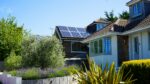
Photo by Watt A Lot on Unsplash
Page Overview
Sunlight Potential in Alberta
Alberta has enough annual sunlight for solar to be an effective energy investment. According to the Canada Energy Regulator, Alberta has the third highest average solar potential in Canada, with a predicted solar insolation of 6.58 kilowatt hours per square meter per month, behind Saskatchewan and Manitoba.
According to the Canadian Forest Service, the annual photovoltaic specific yield (the amount of energy produced, in kilowatt hours, for every kilowatt-peak of module capacity) across Alberta is divided in three distinct areas.
- Parts of Alberta, specifically the South-East parts of the province, see some of the highest photovoltaic specific yield in all of Canada (between 1300 and 1400 kWh/kWp).
- Parts of eastern and central Alberta, including Edmonton and Calgary, see slightly less photovoltaic specific yield (between 1200 and (kWh/kWp).
- The remaining parts of the province, primarily to the north and west, see slightly less specific yield (between 1100 and 1200 kWh/kWp).
Without knowing these terms, all you need to glean from these figures is that Albertan locales consistently gets the requisite sunlight to justify solar.
To check your annual photovoltaic potential, this map is a useful tool, and applicable across Canada.
Average Costs
Many different variables contribute to the total price of a solar installation, such as system size, cost of equipment, and labor costs.
Realistically, you can expect to spend approximately 15k or more on any solar installation.
It can be hard to compare installation prices between installations of different sizes, and even different quotes for your home, without taking into account the price per watt. In Alberta, the general cost of a solar installation will between $2.50 and $3.00 per Watt.
There are other costs that can be incurred, either before, or as part of, your solar installation. These will bring your cost and cost per watt up, but provide different kinds of protection. Here are just a few of these options to consider before you install solar.
- Roofing – It is recommended to consider the lifetime on your shingles when considering a roof-mounted solar installation, as replacing shingles becomes complicated if you need to disassemble and reassemble the solar installation. Shingles and solar panels have similar lifespans, so lining up these two rooftop expenditures will make things easiest for you.
- Battery storage – In some cases, large batteries can overcome the inherent intermittency of solar or provide back-up power for essential electronics. However, these batteries are expensive at the current time, and many will not benefit from their inclusion.
- Critter guards – A critter guard is a type of wire mesh barrier that prevents animals like birds or squirrels from taking up residence underneath or within your solar panels and keeping them away from cables they might otherwise want to chew on.
Get unbiased information
Add EnergyRates.ca as a Preferred Source on Google to see more of our articles in your search results.

Photo by Raze Solar on Unsplash
Monthly Savings
This is hard to quantify a general average when there are so many variables that would influence the amount you save monthly from solar generation. In plain terms: Your monthly savings will ultimately be the difference between your average monthly energy costs before solar installation and after installation. Your savings you can expect to see from installing solar really depends on the size of your system, and how much energy you use annually.
It’s reasonable that with intentional energy usage, the typical system that you will be approved for can cover the bulk of your energy consumption during summer months, potentially even surpassing your summertime energy bills. However, during the winter months, your system will invariably generate less electricity as the days are shorter and you will have less daylight hours.
One of the better methods to increase your annual energy savings is by signing up for a Solar program available in Alberta that provides different seasonal rates for Solar Microgenerators. The base principle across all of these programs is a high-priced rate for summer months that increase compensation if your electricity is sold back to the grid, and a low-priced rate for the winter that is affordable when your system is produced at its lowest values.
Payback Times
It is not difficult to calculate an estimate payback period. Likely, included in your quote might be an estimate in how many years your system will pay for itself in savings.
In our research, the average payback period In Alberta was purported to be between 6 and 10 years, but many factors influence the actual amount of time before you will break even on a solar system.
Once you can estimate annual electrical savings as a result of your solar installation (accounting for varying production throughout the year), you can estimate a payback period (in years) by dividing the total cost of the installation by the annual savings.
Of course, as your annual energy savings will not be a consistent number, there are many factors that will affect the payback period.
Alberta in particular has two qualities that gives us, on average, some of the fastest repayment times in Canada. First, we get a lot of sunlight hours across the province – over 2300 hours of sunlight throughout most of Alberta’s major population centres. Secondly, Albertans have some of the most expensive electricity across Canada. Since you can expect to save more money from your power bill with Solar in Alberta, compared to provinces like Manitoba or Quebec who benefit from cheap, regulated electricity, the payback time is far more favourable.
Photo by Raze Solar on Unsplash
Solar Panel Position
Solar panel positioning is a nuanced topic with many considerations regarding how panels should be placed. There are a few key principles that installers keep in mind while configuring a layout for your solar installation. Today, when the number of solar panels in an installation often exceeds 10, installers focus configuring a layout with consistent output and year-round performance while working within the constraints of your home and/or property.
Directional positioning
For installations in the Northern hemisphere, the ideal placement to capture the most sunlight should be facing true south (i.e. towards the South Pole, not magnetic south). According to A study conducted by Carleton University and the University of Waterloo, optimal values for energy production range between 15 degrees east, and 15 degrees west of due south.
If this is impossible or unfeasible for your building, you can get by having panels that are facing east or west, or even panels that face straight upwards. Both east and west facing panels will generate similar amounts of power to each other but will generate at different times: eastern-facing panels will generate more earlier in the day when the sun is rising, whereas western-facing panels will generate more later in the evening when the sun is setting. Since peak times for electricity consumption occur in the evening, there is a general recommendation for western-facing panels between the two cardinal directions.
Northern facing panels are not recommended, as they will greatly underperform against panels facing in other directions.
Panel Tilt
Solar panel tilt is based both upon rooftop angle and location, specifically geographical latitude, meaning the ideal angle will increase as you move northwards. NAIT’s PV Reference system compared data of energy production for various solar panel tilts and found that Solar panels equal to that of the latitude produced most energy annually, with a 45-degree angle outputting comparable amounts of electricity, and panels with less tilt performing better during the summer months.
Knowing your geographical latitude is a great place to start to understand what angle your panels should be tilted.
Example latitudes:
- Calgary Latitude: 51 degrees N
- Edmonton Latitude: 53 degrees N
However, certain use cases can see improved seasonal production by adjusting the angle. Due to the change in the sun’s trajectory across the seasons, optimal tilt angle changes throughout the year, decreasing by 15 degrees during summer months and increasing by 15 degrees during winter months. A solar powered summer cabin might see benefit with a lower tilt than what is optimal for your full-time home.
Obstruction
Another important consideration about solar placement is to avoid areas that have any object blocking the sun’s rays. Blockages, like neighbouring buildings or trees, can reduce the efficiency of your solar panels massively. Avoiding locations that would have the panels shadowed by some obstruction is an important consideration.
For some, potential obstructions might be a deciding factor between roof-mounted solar and ground-mounted solar.
Solar Installation Size
There are two main factors that will ultimate dictate how “big” your solar system can be, or how many panels get installed and connected to your home’s electricity system.
- First factor is just a matter of infrastructure. For instance, how much roof space do you have available at a good angle and facing a favourable direction for a roof-mounted installation, or total unobstructed land you have access to for a ground-mounted installation.
- The second factor is a matter of your energy consumption. As dictated by Alberta’s Microgeneration Regulation, the maximum size for a residential net-metering solar installation is based upon your historical consumption over the past 12 months, and no higher than 150 kW. Most installers will size a system to 110% of the energy consumption during this period, provided documentation.
Photo by Raze Solar on Unsplash
Solar Incentives
In the past few years, much of the discourse regarding solar installation in some way or another relates to the Canadian Greener Homes Grants or Canadian Greener Homes Loans. As of 2026, this governmental incentive is no longer offered.
As solar is still a growing industry with many palpable benefits, there are often incentives offered by Municipal, Provincial, and Federal Governments to encourage more people to invest in solar.
There are still numerous incentives and rebates available across the country, depending on where you live and the type of installation you are paying for.
If you are wondering if there are any applicable solar incentives you need to learn about before making a decision, you can find out here.
Solar Installation Timelines
A lot of time can pass between signing an agreement for an installation and generating electricity of your own. Installation bottlenecks, permit processing, inspections, and more can all increase the duration you could wait before your solar system is online.
The timeline from quote to payment to installation varies from company to company and is influenced by their volume of customers. You can expect at least three months from purchase date to when you can start generating. Every Solar installation company should give you an estimated timeline of when construction on your solar installation can begin.
We have broken down the timeline of how long could take, so you can have a better idea of what the timeline might look like for you.
Site Survey & Assessment
Completed by your solar installer, before installation. One of the earliest steps needed for the installers to understand the site and its inherent benefits or limitations. This assessment is a prerequisite that fills in gaps that you cannot provide the site information for, such as if a rooftop is structurally capable to support the loads that adding a rooftop PV system entail, such as the system itself, increased snow accumulation, etc. Depending on availability, it could a number of days, or a number of weeks before a solar company is able to schedule this assessment.
Design
The engineering department of the company you hire to install solar will design a system with your energy usage and property in mind. Depending on many factors, this could take up to a couple weeks, and you should receive an overview of design and the required components.
Permits
Aside from the installation itself, permitting is going to affect the timeline of solar installation more than any other factor. For a typical residential solar installation, you will need an Electrical Permit, Building Permit, and a Micro-generation application, of which your installation company will typically handle for you.
Across the province, permit turnaround can be inconsistent, often depending on your local utility company, with some users reporting it took several months for their permits to be approved. Ask your installation company about any questions you might have regarding permit processing in your area.
Installation
Depending which company you choose, and the time of year you sign the dotted line, a lot of time can pass before the installation team is ready for your installation. Somewhat unintuitively, the best times shop around between installation companies will be during the winter, as there will be likely fewer customers in line ahead of you.
The installation itself should not take very long, between one day to one week, depending on the system and the company. After signing the contract and paying for solar, most of the time you will wait will be until the company has an installation team ready.
Depending on which company you decide to do the installation for you, you could wait up to 6 months.
Bi-Direction Meter Installation
Most solar microgenerator sites are net metering sites, which means you will need a bi-direction meter connected to send excess energy you generate back to the grid, so you can get compensated. If your home or property does not have a bi-directional metering, one will need to be installed. Your installation company should contact your locale Wire Service Provider to perform this installation for you.
The installation should only take a day. The wait time for installation will vary by distribution company in your area. This should be one of the last things, as it the bi-direction meter should be installed after the system is installed and inspected.
Depending on Wire Service Provider in your area, the wait times for this step can vary significantly, sometimes up to 2 months for certain WSPs.
City Inspection
As required by law, your system needs to pass a city electrical inspection before you can turn your system on. Most of the time, it will not take long for a city inspector to inspect your installation, often around 1 week. Sometimes, your solar installer will organize this for you, but other times not, so check with your installation company for anything you will need to complete on your end before your solar installation will go live.
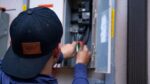
Photo by Raze Solar on Unsplash
Our Recommendations
Our advice is to get many quotes from different companies at first. There are numerous solar installation companies across the province that are professional, organized, and customer orientated.
Since there are many different variables that can impact the quoted price of the installation, shopping around gives you a ranging list of different options, with key decision-making factors like size of the installation, price per Watt, total price, and rough timeline of installation included.
Trust is important when working with a solar installation company, and you should verify with online reviews and social media, if possible, to ascertain the reputation of the company before signing anything. You should also watch for claims that do not add up – such as misrepresentation of solar incentives, or other potentially fraudulent claims, during this process.
We have already done a lot of the legwork in finding reputable Solar installation companies that service locations across Alberta. We recommend reaching out to as many as possible to ensure you get a wide range of quotes so you can choose the quote that has the design, size, and price you like best. We recommend starting with our list, and expand from there, so you have many choices to choose from.
Our article on the best solar installation companies in Alberta.
EnergyRates.ca
We specialize in helping you find the electricity and natural gas plans that work with your home or business energy priorities. Whether that’s meeting your sustainability goals or just cutting your energy costs we can help you find what works. Fill out the form above to get started.