From record-high prices to lower rates
It can be easy to forget just how volatile Alberta’s electricity market was between 2020 and 2023. In August 2022, for example, the Regulated Rate Option (RRO) in the Calgary area had increased by 178.7% compared with 2020, rising from 6.222¢/kWh to 17.341¢/kWh. Floating rates reached roughly 30¢/kWh at the time.
The following year brought another major spike. In Edmonton, electricity rates increased by more than 100% between February 2022 and February 2023, rising from 15.972¢/kWh to 32.957¢/kWh before the price cap was considered.
With prices climbing so quickly, fixed-rate electricity plans became an attractive option for consumers looking for protection from sudden increases. But the market didn’t stay there.
Electricity prices started moving in a different direction
Beginning in 2024, Alberta’s electricity market began showing signs of greater stability, helped in part by increased generation capacity. However, prices still fluctuated considerably from month to month. In Edmonton, for example, the RRO rate in September 2024 was 10.811¢/kWh, 59% lower than the 26.998¢/kWh average recorded in September 2023.
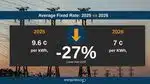
In fact, the introduction of the Rate of Last Resort (previous RRO) in January 2025 brought more stability for consumers on regulated rates: Instead of facing monthly changes, rates started to be set at around 12¢/kWh for the current two-year term. Fixed-rate plans averaged around 9.6¢/kWh, while floating rates averaged approximately 6.8¢/kWh at that time.
Competitive electricity plans are now significantly cheaper
By 2026, the difference had become even more noticeable. Fixed electricity rates reached approximately 7¢/kWh, while floating rates dropped even further. In August 2026, floating rates were around 40% lower than fixed rates and had reached their lowest average levels since 2016.
A comparison between August 2025 and 2026 shows an electricity price for August 2026 settled at ¢4.57/kWh, reflecting a 9.22% decrease from the previous year’s settlement of ¢5.04/kWh, and a 46.27% increase from July 2026
That creates a very different decision for consumers than the one they faced just a few years ago. Instead of asking how to protect themselves from rapidly increasing electricity prices, some Albertans are now considering whether they could benefit from the lower prices available in the competitive market.
Fixed or Floating?
Therefore, should you choose a floating or fixed electricity rate? A lower floating rate may look appealing, particularly when compared with the prices consumers experienced in 2022 and 2023. But floating rates are tied to market conditions, meaning they can change from month to month.
That makes them fundamentally different from fixed-rate plans. With a fixed plan, consumers generally pay an agreed-upon electricity rate for the term of the contract, providing more predictability when budgeting. A floating plan, on the other hand, can offer lower prices when market conditions are favourable, but it also exposes consumers to future price changes. In other words, today’s low floating rate doesn’t guarantee that the rate will remain low.
Get unbiased information
Add EnergyRates.ca as a Preferred Source on Google to see more of our articles in your search results.
There isn’t one right electricity plan for everyone. A plan that made sense when electricity prices were reaching record highs may not necessarily be the best fit when market prices are considerably lower. Likewise, choosing a floating rate based solely on today’s price may overlook the possibility of future increases.
For some households, predictable monthly costs may be more important than the possibility of paying less when market prices fall. Others may be comfortable accepting some price fluctuations in exchange for the potential savings offered by a floating plan.
The right choice ultimately depends on the consumer’s budget, electricity usage, risk tolerance, and comfort with price changes.