

• Skip to primary navigation
  • Skip to main content
  • Skip to primary sidebar
  • Skip to footer
EnergyRates.ca

EnergyRates.ca

Compare and Find the Lowest Energy Rates

Get a free quote call1-855-635-9608
  • Alberta
    • Regional Energy Services
      • City of Calgary
      • City of Edmonton
      • Fort McMurray
      • Grande Prairie
      • Medicine Hat
      • Red Deer
      • Crowsnest Pass
      • Cardston
      • Fort Macleod
      • Ponoka
      • Fort Saskatchewan
      • Cold Lake
      • Canmore
    • Rates & Information
      • Site Catalog Tool
      • Alberta Carbon Tax and Rebates
      • Regulated Services
      • Rate of Last Resort (ROLR)
      • Alberta Energy Market Data
      • Utilities Consumer Advocate and UCA Helps
      • Cutting Your Farm’s Energy Costs
      • Breaking Down Your Alberta Electricity and Natural Gas Bills
      • Obtaining Financial Assistance
      • Default Rate Tariff (DRT)
      • Energy Disconnection and AUC Winter Reconnection Program
      • Electricity and Natural Gas Mediation
      • Electricity Services for Rental Properties
      • Who is my Energy Provider?
      • Micro-Generation in Alberta
      • Green Energy Credits
      • Alberta Energy Glossary
      • Understand Energy Bill Estimates and Meter Readings
      • How is The Pool Price for Electricity Determined in Alberta?
      • What is the AESO and How It Works
    • Electricity and Natural Gas Companies
      • AltaGas
      • ATCO Energy
      • Direct Energy
      • Encor by EPCOR
      • ENMAX Energy
      • Hudson Energy
      • Just Energy
      • Link Energy
      • Superior Energy
      • TransAlta
      • Spot Power
      • UTILITYnet
      • ACE Energy
      • Sponsor Energy
      • Burst Energy
      • Campus Energy
      • Ambit Energy
      • XOOM Energy
      • Peace Power
      • Ridge Utilities
      • Regional Energy
      • Olympus Energy
      • Acorn Energy
      • Astro Energy
      • PowerBill Electricity
      • Prairie Power
    • Regulated Rate Providers – Natural Gas and Electricity
      • AltaGas Utilities
      • City of Lethbridge Electric Utility
      • Direct Energy Regulated Services
      • ENMAX Power Corporation
      • EPCOR Energy Alberta GP Inc
    • Small Commercial Fixed Rate Providers
      • EasyMax
      • Encor by EPCOR
    • Wire Service Providers
      • AltaGas Utilities
      • ATCO Gas
      • City of Lethbridge Electric Utility
      • ENMAX Power Corporation
      • EPCOR Distribution & Transmission Inc
      • FortisAlberta
    • Energy Efficiency Programs in Alberta
      • Energy Saving Grants for Businesses in Alberta
      • How the Clean Energy Improvement Program (CEIP) Works in Alberta
  • BC
    • Regional Energy Services
      • Vancouver, BC Electricity Retailers and Natural Gas Providers
      • Surrey Electricity Providers and Natural Gas Services
      • Burnaby Electricity Providers and Natural Gas Services
      • Victoria, BC Electricity Retailers and Natural Gas Providers
    • Rates & Information
      • Breaking Down Your British Columbia Electricity & Natural Gas Bills
      • Explaining Your British Columbia Electricity & Natural Gas Rates
      • How to Read Your British Columbia Electricity & Natural Gas Meters
      • Why the British Columbia Energy Market is Regulated
      • How to Start, Transfer, or Change Your Electricity and Natural Gas Services in British Columbia
      • British Columbia Utilities Commission (BCUC) 
    • Residential Natural Gas Retailers
      • FortisBC & Tarasen Gas
      • Access Gas Services
      • Planet Energy British Columbia
      • Direct Energy British Columbia
      • Just Energy British Columbia
      • Summitt Energy British Columbia
    • Commercial Natural Gas Retailers
      • Access Gas Services
      • Bluestream Energy
      • AltaGas British Columbia
      • Direct Energy British Columbia
      • Just Energy British Columbia
      • Planet Energy British Columbia
      • Summitt Energy British Columbia
    • Regulated Energy Providers
      • BC Hydro
      • FortisBC & Tarasen Gas
    • Home Renovation and Appliance Rebates
  • Manitoba
    • Regional Energy Services
      • Winnipeg
      • Brandon
      • Steinbach
    • Rates & Information
      • Breaking Down Your Manitoba Electricity & Natural Gas Bills
      • Explaining Your Manitoba Electricity & Natural Gas Rates
      • How to Read Your Manitoba Electricity & Natural Gas Meters
      • How to Start, Transfer, or Change Your Electricity and Natural Gas Services in Manitoba
      • Why the Manitoba Electricity Market is Regulated
    • Residential Natural Gas Retailers
      • Just Energy
      • Planet Energy
    • Commercial Natural Gas Retailers
      • ECNG Energy
    • Regulated Energy Providers
      • Manitoba Hydro
    • Manitoba Energy Efficiency Programs
  • Ontario
    • Regional Energy Services
      • Ottawa
      • Mississauga
      • Toronto
      • Brampton
      • Hamilton
      • London
      • Markham
      • Kitchener
      • Windsor
      • Burlington
      • Sudbury
      • Oshawa
      • Barrie
      • Guelph
      • Oakville
    • Rates & Information
      • Why the Ontario Energy Market is Regulated
      • Explaining Your Ontario Electricity Rates
      • Explaining Your Ontario Natural Gas Rates
      • Breaking Down Your Ontario Electricity Bill
      • Breaking Down Your Ontario Natural Gas Bill
      • What is the Global Adjustment?
      • How to Set Up Your Utility Service When You Move in Ontario
      • Does Your Ontario Energy Provider Require a Security Deposit?
      • How to Renew Your Energy Contract
      • How to Start Natural Gas Service for the First Time
      • Canceling an Ontario Energy Contract
      • How Net Metering Works in Ontario  
      • Demand Response in Ontario
      • Green Button in Ontario
      • How to Read Your Ontario Gas Meter
      • Ontario Electricity Support Program (OESP)
      • Save On Energy
      • Green Energy in Ontario
      • Ontario’s Local Hydro Utilities or Local Distribution Companies (LDC)
      • Ontario Energy Efficiency Programs
    • Ontario Retail Electricity & Natural Gas Companies
      • Just Energy
      • MyRate Energy
      • Planet Energy
      • RiteRate Energy
      • Summitt Energy
    • Ontario Regulated Price Plan Providers
      • Hydro One
      • Enbridge Gas Distribution
      • Union Gas
  • Saskatchewan
    • Regional Energy Services
      • Saskatoon
      • Regina
      • Prince Albert
    • Rates & Information
      • Breaking Down Your Saskatchewan Electricity and Natural Gas Bill
      • Explaining Your Saskatchewan Electricity & Natural Gas Rates
      • How to Read Your Saskatchewan Electricity and Natural Gas Meters
      • How to Update Your Saskatchewan Energy Services
      • Why the Saskatchewan Electricity Market is Regulated
    • Residential Natural Gas Retailers
      • Future Now Energy
      • Just Energy
    • Commercial Natural Gas Retailers
      • Connect Energy
      • Hudson Energy
      • Peak Energy
    • Regulated Energy Providers
      • Saskatoon Light & Power
      • SaskEnergy
      • SaskPower
      • Swift Current Electricity Services
    • Commercial Energy Efficiency Programs
  • Québec
    • Regional Energy Services
      • Montréal
      • Québec City
      • Sherbrooke
      • Gatineau
      • Laval
      • Coaticook
      • Westmount
      • Lévis
      • Saguenay
      • Baie-Comeau
      • Longueuil
      • Trois-Rivières
      • Magog
      • Alma
      • Saint-Jean-Baptiste
      • Joliette
      • Amos
    • Rates & Information
      • Breaking Down Your Québec Electricity and Natural Gas Bills
      • Explaining Your Québec Electricity and Natural Gas Rates
      • How to Start, Transfer, or Change Your Electricity and Natural Gas Services in Québec
    • Residential Natural Gas Retailers
      • Just Energy
    • Commercial Natural Gas Retailers
      • Just Energy
      • Access Gas
      • Summit Energy
      • Hudson Energy
      • Active Energy
      • Direct Energy
      • Comsatec
    • Regulated Elecricity & Natural Gas Retailers
      • Énergir
      • Gazifère
      • Hydro-Québec 
    • Energy Efficiency Programs and Rebates in Québec
  • Plans/Products
    • Plans
      • Fixed Rate Plans
      • Floating Rate Plans
      • Regulated Rate Plans
      • Block Pricing Plans
      • Load Following Plans
    • Products
      • Residential Electricity and Natural Gas Plans
      • Small Business Electricity and Natural Gas Plans
      • Small Commercial Electricity and Natural Gas Plans
      • Large Commercial Electricity and Natural Gas Plans
      • Industrial Electricity and Natural Gas Plans
      • Farming Electricity and Natural Gas Plans
    • Utility Bonds
  • Tips
    • Electricity Rates – Tips for Keeping Your Energy Costs Low
    • Natural Gas Rates – Tips for Lowering Your Bills
    • Energy Rates Blog
    • Energy Stats
    •  FAQ
    • Disclaimer
  • Content Hubs
    • Solar Energy
    • Electric Vehicles
    • Water Hub
    • Product Reviews
  • Renewable Energy
    • Green Energy Rates & Renewable Energy Solutions
    • RECs, Carbon Offsets & Green Building Certification
    • Carbon Accounting for Corporations: Scopes 1, 2, and 3
    • Virtual Power Purchase Agreements (VPPAs)
    • How to Market Corporate Sustainability Projects
  • EN

Ontario’s Industrial Conservation Initiative (ICI): What is it, and how does it work?

Looking for cheaper electricity or natural gas? Find a better rate with Canada’s top energy comparison site.

Find a cheaper energy rate

1

The Industrial Conservation Initiative (ICI) is another program from Ontario that consumers from the industrial sector or commercial sector can use to manage energy costs.  Effective since May 1st , 2022, industrial and commercial businesses in Ontario benefited from lower electricity costs through lowered Global Adjustment costs thanks to the ICI. At the start of May 1st 2022 to April 30, 2023 base period, the final adjusted AQEW will no longer be used for determining the top five peak hours. Also as of May 1st, there is no longer a regulatory requirement for the IESO to provide LDC’s with draft PDFs – which before, they required peak hour data submitted to calculate everything. This is no longer the case. 

What is the Industrial Conservation Initiative (ICI) in Ontario?

The Ontario Industrial Conservation Initiative (ICI) is a demand response program aimed at shifting large electricity users’ power consumption to off-peak hours. This allows these customers to manage their Global Adjustment (GA) costs by reducing demand during peak periods. 

Who’s eligible to participate in the Industrial Conservation Initiative?

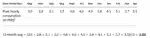
To be eligible to participate in the ICI, customers must have an average monthly peak demand greater than 500 kW during an annual base period from May 1 to April 30.

Customers who are eligible to participate in ICI may include:

  • Customers in the manufacturing and industrial sectors, including greenhouses (with NAICS codes commencing with the digits “31”, “32”, “33” or “1114”) with an average monthly peak demand of greater than 500 kW and less or equal to 1 MW.
  • Customers with an average peak demand of above 1 MW but less than or equal to 5 MW.
  • Customers with maximum hourly demand for electricity in a month that exceeds an average of 5 MW for the applicable base period.
  • Existing Class A customers who participated in one or more of the programs specified in Ontario Regulation 429/04 in Section 6.2 (3) and dropped below the peak demand threshold during a base period for an adjustment period that began on or after July 1, 2016, may be eligible. (Class A is automatically applied for customers with average monthly peak demand above 5 MW.)

An example calculation for average monthly peak demand to determine eligibility is shown in the table. Image source: Taken from Industrial Conservation Initiative Backgrounder & FAQs.
1

When can companies and industries apply for the ICI?

Each cycle of the ICI starts with a base period, May 1 to April 30. At the end of this base period, customers are assessed for eligibility. Eligible customers with an average monthly peak demand greater than 500 kW and less than or equal to 5MW that wish to participate will need to opt-in to the ICI by June 15.

Customers with an average monthly peak demand above 5 MW are automatically considered Class A and must opt-out by June 15 if they choose not to be settled as a Class A customer for the upcoming adjustment period.

What is the ICI hiatus and how long is it going to be?

On June 26, 2020, the Ontario government introduced a mandatory ICI peak hiatus for ICI participants to allow businesses to focus on recovering from the impacts of COVID-19.

The peak hiatus applies to Class A customers participating in the ICI for the July 1, 2020 – June 30, 2021 adjustment period.

How to apply for the ICI in Ontario?

Eligible customers will be informed by their distributor before May 31 each year if they are eligible – to opt-in or out of the ICI, contact your distributor.

Can companies anticipate power peaks?

The more accurately that a Class A customer can predict and reduce their consumption during the top five Ontario peak demand hours, the more they will be able to reduce their overall electricity charges.

The Independent Electricity System Operator (IESO) publishes a Peak Tracker and associated data tables to assist Class A participants with anticipating the possible peaks. ICI peak hours are confirmed using Final adjusted AQEW (allocated quantity of energy withdrawn) values. Class A customers are billed Global Adjustment-based on their contribution to the top 5 peak hours. These values are published 20 business days after the trade date and only the highest demand hour of the day is used.

Information on energy management is available on the IESO’s website.

What is the Peak Demand Factor (PDF)?

Peak Demand Factor refers to a Class A customer’s percentage contribution to the top five peak Ontario demand hours over a 12-month period of May 1-April 30 (base period).

After the IESO establishes the final top five Ontario demand peaks using adjusted allocated quantity of energy withdrawn (AQEW) for a base period, the IESO and LDCs then look at each Class A customer’s consumption during those five hours (coincident peaks) to calculate their corresponding portion of peak demand or PDF.

This PDF is used to determine a customer’s allocation of costs for the billing period. For more information on how customer PDFs are calculated, you can visit the IESO website.

Global Adjustment Class A-Eligibility

What is Class A Eligibility, and who is eligible? 

Customers who are eligible and participate in the ICI are referred to as Class A customers, and they pay their share of global adjustment (GA) based on their Peak Demand Factor, as mentioned before, the PDF. A customer’s PDF is based on their contribution to the top five peak hours over a 12-month base period (May 1st to April 30th) 

Changes since 2021 regarding the Class A adjustment eligibility 

Effective May 1st, 2022, a transferee (new owner of the transferred load facility) may request for a transfer of title to all or a portion of a load facility under Section 8 or 8.1 of Ontario Regulation 429/04 by providing written notice of the transfer to their local distribution company (LDC), if they are a consumer or the IESO, if they are a market participant. Eligibility, peak demand factor calculation, and effective date will be determined as outlined in the regulation. The IESO will administer the transfer of ownership of ICI facilities for market participation as part of the transfer of facility registration procedure.  

Which customers with varying average monthly maximum demand differences are eligible? 

Customers with average monthly maximum hourly demand greater than 5 MW, as calculated for the applicable base period, automatically qualify to participate in the ICI. Eligible consumers will be informed by their local distribution company, and eligible market participants will be notified by the IESO before May 31st, and if the necessary data and consent are provided to the LDC (or IESO for market participants), as outlined in Ontario Regulation 429/04, sections 6 and 7. These customers must opt out by June 15th of each year. 

A customer’s average monthly maximum hourly demand is determined by calculating the customer’s 12-month average of their highest hourly peak demand values for each of the 12 months of the base period. Peak demand values from separate load facilities under the same ownership cannot be aggregated for the purposes of determining Class A eligibility unless permitted otherwise under Ontario Regulation 429/04, section 6.1(4) or section 7.1(4). 

Customers with an average monthly maximum hourly demand between 1 MW and up to and including 5 MW will be informed by their local distribution company, or the IESO if they are a market participant, before May 31 of each year if they are eligible to participate in the ICI. Eligible customers must opt in by June 15 and must provide the required data and consent outlined in Ontario Regulation 429/04, sections 6 and 7 in order to participate in the ICI during the associated adjustment period. Subject to compliance with all regulatory requirements, existing Class A customers’ facilities will retain their Class A status unless the customer chooses to opt out of the ICI program for the upcoming adjustment period. 

Existing Class A customers who participated in one or more of the conservation programs specified in Ontario Regulation 429/04 and dropped below the average monthly maximum hourly demand threshold during a base period for an adjustment period that began on or after July 1, 2016, may still be eligible to continue participating in the initiative. LDC customers should contact their LDC, and market participants should contact the IESO if they believe that their eligibility or PDF calculation has been impacted by their participation in these programs. 

Customers with average monthly maximum hourly demand greater than 500 kW and less than 1 MW in certain manufacturing and industrial sectors 

In April 2017, the Government of Ontario reduced the ICI eligibility threshold for customers in targeted manufacturing and industrial sectors, including greenhouses (i.e., with NAICS codes commencing with the digits “31”, “32”, “33” or “1114”). Customers participating in the targeted sectors may be eligible to participate in the ICI if their average monthly maximum hourly demand during a base period is greater than 500 kW and less than 1 MW.


Primary Sidebar

Footer

EnmaxEpcorSponsor EnergyEncorDirect EnergyRite Rate
EasyMaxEncorSpot PowerHudson EnergySummitt EnergyEncor

Get Monthly Energy Insights!

This field is for validation purposes and should be left unchanged.

Alberta fair competition statement:

Customers are free to purchase natural gas services or electricity services from a retailer of their choice. For a list of retailers, visit www.ucahelps.gov.ab.ca or call 310-4822 (toll free in Alberta).

review
  • Scholarship Information
  • Press Room
  • About Us
  • Contact
  • Terms and Conditions
  • Privacy Policy

Copyright © 2026 ENERGYRATES.CA

This website uses cookies and similar tracking technology for several purposes, including enhancing your experience when you visit our websites and personalizing ads/content available on our website. You can learn more about our use of these technologies in our Privacy Policy. By continuing to use this website, including clicking off or closing this banner, you consent to the use of these technologies by this website.